A practical guide to leadership communication strategies
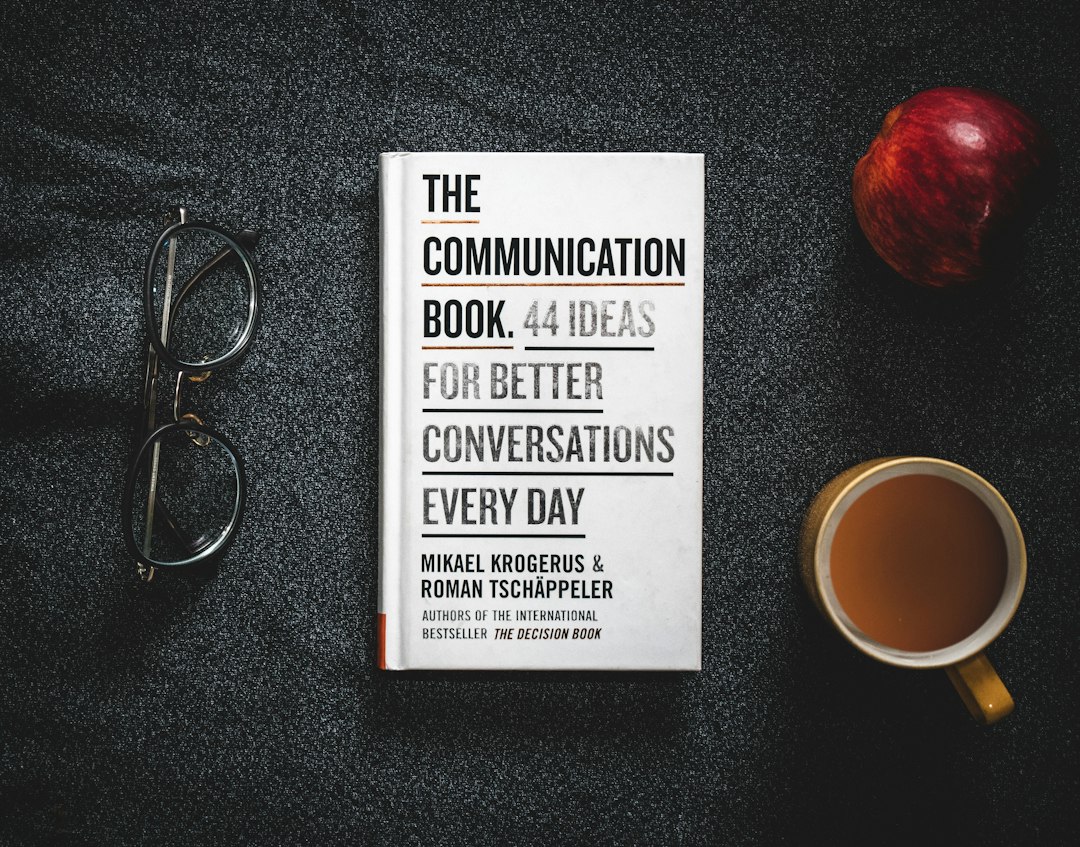
If you lead people, you already practice leadership communication strategies every day, whether you plan them or not. The question is whether your messages consistently create clarity, trust, and action. This field guide gives you a repeatable way to communicate on purpose, not by accident, so your team hears the same message you intended, at the moment they need it, in a format they can use.
What follows is a pragmatic playbook you can implement immediately. You’ll find frameworks like BLUF and SBAR, a messaging stack that connects vision to day-to-day decisions, meeting cadences that reduce back-and-forth, and metrics that show whether your communication is actually working. Use it to level up your leadership without adding more meetings to the calendar.
Two notes before we start. First, strong communication is as much about what you don’t say as what you do—brevity and timing matter. Second, communication is a system. When you align your voice, channels, and rituals, messages reinforce each other and reduce misinterpretation. As you read, pick two actions you can pilot this week, then iterate based on feedback.
For more resources, you can browse our Leadership & Management articles or start at the Business2i home page. Internal references and templates are included throughout this guide to help you adapt ideas to your context.
Why communication fails (and what great leaders do instead)
Leaders rarely intend to be vague. The most common failure is signal-to-noise. The leader holds a rich mental model while the audience receives a stream of partial details, often in the wrong sequence or channel. Misalignment happens because the message is too long, too late, or too abstract. When people don’t know why the message matters, they fill the gap with assumptions, which creates churn and wasted effort.
Great leaders do the opposite. They design messages with a clear outcome, not a list of updates. They deliver the message at the right altitude, using a structure the audience can scan. They repeat core points across channels without changing their meaning. They ask for and act on feedback about what didn’t land. Over time, this creates a shared language, which dramatically lowers coordination cost and improves execution speed.
Here are high-confidence patterns behind failed communication:
- Ambiguous intent: The sender isn’t clear whether they want awareness, alignment, or action. The audience then guesses—which leads to inaction.
- Wrong altitude: Senior leaders speak in vision statements when the audience needs next steps, or they micromanage details when the team needs context.
- Channel mismatch: Urgent messages sent via slow channels (or vice versa). Or a single channel is used when a mix would have compressed the loop.
- Infrequent repetition: Messages delivered once and never reinforced, so people forget or assume priorities changed.
- Hidden constraints: Decisions communicated without constraints or trade-offs, which invites re-litigating the decision in every meeting.
What do great leaders do instead?
- Define the outcome: State whether you want awareness, alignment, or a decision.
- State the bottom line first: Use BLUF. People remember the open and close. Start with the most important sentence.
- Choose a channel on purpose: Match the message, audience, and risk to the channel (more on this below).
- Codify a cadence: Make communication predictable. People should know when and where to look for updates.
- Document decisions: Write down the choice, the why, the constraints, and what would change the decision later. This stops decision drift.
leadership communication strategies for modern organizations
Communication is a system, not a speech. Build it around four layers—purpose, priorities, practices, and proof—so daily messages ladder back to strategy:
- Purpose: Your enduring narrative. Why we exist, who we serve, what success looks like, and how we behave.
- Priorities: The next 12–18 months. Which bets we’re making, what we’ll not do, and the few metrics that define progress.
- Practices: Weekly behaviors. How we meet, make decisions, share status, and escalate risks.
- Proof: Evidence that the system works. Engagement, cycle time, error rates, and retention. These are the feedback loops.
When you assemble these layers, people can place any message at the right altitude. A one-liner in Slack gets recognized as a practice-level clarifier, not a changing strategy. An all-hands story clearly maps to purpose and priorities. You reduce second-guessing and give people the confidence to act with partial information because they trust the context.
Here is a simple diagnostic. Ask five people the same questions: What are we building? For whom? What are the three priorities this quarter? Which two behaviors are we rewarding? If you hear five different answers, your communication system is not yet a system. Use the rest of this guide to build one.
The messaging stack: from vision to daily decisions
Many teams have a mission statement on a wall and a backlog in a tool, with nothing connecting them. The messaging stack fills that gap. It provides a few reusable artifacts that make messages repeatable and portable across channels.
1. Vision narrative (1–2 pages): A short, vivid story that explains who the customer is, the problem you help them solve, and how the world looks when you succeed. Write it in plain language. A good test: can a new hire read it on day one and explain it to a friend?
2. Strategy on a page: A single-page map that names three to five priorities, the rationale behind each, measurable outcomes, and what you’re not doing. Link this in every all-hands deck and status update. Use the same phrasing every time, so repetition builds memory.
3. Decision log: A brief written record of key decisions, with the date, owner, context, options considered, chosen path, and a trigger that would cause a revisit. This turns communication into institutional memory and prevents “we changed our mind without telling anyone.”
4. Operating guidelines: Your rules of engagement. How to use Slack or Teams, email, docs, and meetings. Escalation pathways. A guideline that says “No status meetings longer than 15 minutes” is far more effective than hoping someone will shorten them.
5. Message map: A one-page grid that connects audience segments to their top questions, the core message you’ll deliver, the channel you’ll use, the ideal timing, and who delivers it. This prevents conflicting messages from different leaders and builds a consistent voice.
With this stack in place, your messages become interoperable. You can copy a paragraph from the vision narrative into an all-hands, pull a bullet from the strategy-on-a-page for a Slack note, and link a decision log entry when someone asks “why did we choose this path?”
Structures that keep messages clear: BLUF, SBAR, SCQA
Memorable communication is structured. Three time-tested structures work across most audiences and channels. Rotate them based on the situation.
BLUF (Bottom Line Up Front): Use when the audience needs speed. Start with your conclusion and the action you want. Add context only if necessary. Example: “Bottom line: we’re shipping the feature on Tuesday with logging disabled to reduce risk. Please review the rollout plan today by 4 p.m.”
SBAR (Situation, Background, Assessment, Recommendation): Use for escalations or when decisions carry risk. Example: “Situation: the vendor missed a security patch. Background: their last two releases were delayed. Assessment: exposure risk is moderate but rising. Recommendation: freeze updates until patch 1.2 arrives, and block deployments that rely on this module.”
SCQA (Situation, Complication, Question, Answer): Use for storytelling in all-hands or when introducing a strategic shift. Example: “Situation: our onboarding funnels are converting well. Complication: activation falls off after day two. Question: how do we improve early retention without new features? Answer: we’ll run three guided experiments focused on habit formation and measure 7-day retention.”
Consider these as Lego bricks. BLUF is your default for emails and Slack. SBAR helps you make escalations unemotional and actionable. SCQA is for narrative change. If you only master these three, your clarity and speed will improve immediately.
Cadence and rituals that reduce noise
Communication fails when it is unpredictable. People don’t know where to look. Create a cadence that sets expectations and reduces ad hoc pings. Here’s a proven weekly and monthly rhythm for most teams:
- Weekly team update (15–20 minutes): Monday or Tuesday. BLUF the top outcomes, dependencies, and red flags. End with the one risk that needs help and one decision you made.
- Weekly written update (one page): Same cadence, linked in a shared space. Include metrics and the decision log. Written updates prevent meetings from becoming the only source of truth.
- 1:1 meetings (45 minutes every two weeks): Follow a simple agenda: priorities, obstacles, growth, feedback. Use a shared doc. Make space for the other person’s topics first.
- Monthly all-hands (45–60 minutes): Narrative context, progress against priorities, three wins, one lesson, and a customer story. Record and summarize.
- Quarterly strategy review (90 minutes): Adjust the “strategy on a page.” Stop or start bets. Clarify trade-offs. This aligns the next quarter’s messages.
Anchor each event to the messaging stack. Every update links to the strategy map and decision log. Every all-hands reinforces the vision narrative and behaviors you reward. People learn where to look for what, and your Slack channels and inboxes get quieter because the system answers common questions by default.
Hybrid team communication: clarity without more meetings
When teams are distributed, communication must be designed for time zones, not just calendars. A few principles make a measurable difference:
- Communicate asynchronously by default: Replace status meetings with written updates. Reserve live time for decisions, feedback, and connection.
- Use stable channels: Create persistent threads for projects with a standard update template. People find the last update quickly and don’t need to ask for context.
- Set reply expectations: If something isn’t urgent, say so and give a reply-by time. This lowers stress and helps people plan their day.
- Share meeting artifacts: Post notes and decisions within 24 hours. Link to the recording with timestamps. This ensures team members outside the time zone loop can contribute.
- Invest in writing: Clarity in writing is the multiplier for distributed teams. Offer a writing workshop, copy-edit instructions, and a small library of templates. People will use what you make easy.
Hybrid communication is not about replicating the office online. It is about exploiting the advantages of both modes. Use co-located time for problem-solving and relationships; use async for status and decisions. Your calendar will shrink, and your throughput will rise.
Feedback loops and measurement: know if it’s working
Communication quality is a leading indicator of execution quality. Measure it. Here’s a lightweight scorecard you can run monthly:
- Content clarity: Ask three questions in a pulse survey: Do you understand priorities? Do you know how your work maps to them? Do you know where to find current status?
- Cadence adherence: Track whether weekly updates, 1:1s, and all-hands occurred as scheduled and whether notes were posted.
- Decision latency: Measure the time from risk identification to decision. A drop usually indicates communication is getting crisper.
- Message reach: For all-hands, track live attendance and recording views. For written updates, track views and comments.
- Escalation quality: Sample five SBARs per month. Are recommendations specific? Are risk ratings realistic?
Pair metrics with qualitative feedback. Rotate a “communication counsel” of five cross-functional people who review one all-hands and one update per month and provide blunt, constructive feedback. Publish the changes you make based on this input. When people see their feedback implemented, they engage more.
Change and crisis: say less, say it earlier, say it again
High-stakes communication is where leaders either earn trust or lose it. Three principles hold in change and crisis moments:
- Tell the truth with context: Say what you know, what you don’t, what you expect next, and when you’ll update again. Ambiguity creates less harm than silence.
- Use one narrative: Draft a single change narrative, then adapt it minimally for each audience. Avoid the temptation to improvise in live settings; people will compare notes.
- Reduce uncertainty with process: Share the decision process and the criteria you will use. People can accept hard news when the process is visible and fair.
Here’s a compact template for change leadership messaging you can adapt:
- What’s changing: Name the change and the “why now.”
- What stays the same: Anchor to purpose and values so people retain a sense of stability.
- Timeline: The phases and gates.
- Impacts: What changes for customers, teams, and individuals.
- Support: Resources, training, and how to ask for help.
- Decision review: What would make us revisit or adjust.
In crisis, follow a tighter loop. Set a cadence (e.g., updates at 10:00, 14:00, 18:00), designate a single spokesperson, and make the command channel clear. Use SBAR for each update. Close with a BLUF call to action. After the event, run a blameless review and add learnings to your operating guidelines.
Inclusive, cross-cultural communication
Global teams add ideas and perspectives that are hard to match, and they also add complexity. A few techniques help messages resonate across cultures and roles:
- Plain language: Avoid idioms, sports metaphors, and region-specific references. Aim for simple words, short sentences, and concrete examples.
- Multiple modalities: Pair written summaries with visuals and short video clips. People absorb information differently.
- Role-inclusive examples: When you explain a change, include examples for engineering, operations, sales, and customer support. This signals respect and reduces follow-up questions.
- Time-zone fairness: Rotate meeting times or offer two sessions. Always record and summarize.
- Accessibility: Use readable fonts, high contrast, and descriptive alt text in decks and docs. Provide captions for videos.
Most inclusive habits cost little time and pay off fast in adoption and goodwill. Build them into your templates so they happen by default.
Tools and templates you can copy
Tools don’t fix communication flaws, but they make good habits easy. Start simple, then scale:
- Message map template: Columns for audience, their top three questions, your core message, channel, timing, and messenger.
- Weekly update doc: A one-page BLUF on outcomes, risks, dependencies, decisions, and metrics, linked to the decision log.
- Decision log: A table with date, owner, context, options, choice, rationale, trigger to revisit, and link to the related doc.
- All-hands deck: A tiny reusable deck with five fixed sections: context, progress, customer story, lessons, and next bets. Keep slide titles the same each month.
- 1:1 template: Agenda fields for priorities, blockers, feedback, growth experiments, and notes. Include a running list of wins to review quarterly.
As you adopt these, resist tool sprawl. Fewer tools, used consistently, create clarity. If two tools overlap, migrate to one and archive the other with a clear cutoff date and index page.
Coaching communication as a team sport
Communication is a teachable skill. Treat it like product development: explicit standards, shared patterns, and regular practice.
- Set a style guide: Short, practical rules: BLUF first, one idea per paragraph, avoid jargon, add links not attachments, default to public channels unless confidentiality applies.
- Run practice reps: Open a monthly “comm clinic.” Volunteers bring a draft update or all-hands story. The group edits together using the style guide. Rotate facilitators to build depth.
- Peer feedback: Pair leaders to review each other’s updates and all-hands. Provide a checklist: BLUF clear? Evidence specific? Ask actionable? Tone respectful?
- Celebrate examples: Share “before and after” examples in a #writing channel. Recognition accelerates adoption.
When communication becomes a shared craft, the organization stops relying on a few gifted speakers and starts building institutional muscle.
Governance and maintenance: keep it sharp
Systems drift without maintenance. Establish a simple governance loop for your communication system:
- Quarterly audit: Review the messaging stack. Retire stale docs, update the “strategy on a page,” prune dead channels, and align labels across tools.
- Ownership: Assign owners for the vision narrative, the strategy page, and the decision log. Publish names so people know who to ask.
- Channel hygiene: Archive inactive channels. Pin the message map and operating guidelines. Keep a clear directory of where to find what.
- Onboarding: Add a communication walkthrough to new-hire orientation. Give examples of great updates and explain the rationale behind your cadences.
- Risk review: Twice a year, simulate a major incident or change announcement. Practice the cadence, confirm roles, and update templates with what you learn.
Governance is not bureaucracy; it is the discipline that keeps messages coherent as teams scale and strategies evolve.
Putting it together this week
Here’s a practical 7-day starter plan to make progress without overhauling everything at once:
- Day 1: Draft a “strategy on a page” and share it for feedback with a 48-hour comment window.
- Day 2: Create a decision log and backfill the last five major decisions.
- Day 3: Publish a weekly update template and pilot it with two teams.
- Day 4: Run a 60-minute workshop on BLUF and SBAR with three examples from your org.
- Day 5: Launch a message map for one upcoming change. Test it with a cross-functional group.
- Day 6: Align your 1:1 template and schedule the next four sessions with agenda links.
- Day 7: Measure a baseline: clarity pulse, cadence adherence, decision latency. Set one target to improve next month.
As you ship small wins, tell people what you changed and why. Communication improvements are invisible unless you narrate their impact. That narration itself becomes an example of the standard you expect.
FAQ: practical answers to common communication challenges
What if my team complains there are too many updates? Reduce frequency and increase quality. Move status to a shared doc and reserve live time for decisions and connection. Use BLUF and limit updates to what changed and what help is needed.
How do I handle conflicting messages from different leaders? Use the message map to assign owners and audiences. Align on one narrative in writing, then distribute. Hold a short weekly sync between leaders to compare upcoming messages.
What if people don’t read? Shorten and repeat. Start with BLUF, use headings, add a TL;DR, and send reminders at predictable times. Offer the message in text and a 90-second video clip. Measure reach and adjust.
How often should I repeat a message? Often enough that you are slightly bored saying it. Most people will hear it for the first time when you feel you’ve said it too many times. Use consistent phrasing to build memory.
Can I delegate communication? You can delegate drafting and logistics, not intent or ownership. Review final messages and be the face of the most important ones. This builds accountability and trust.
Isn’t this a lot of writing? At first, yes. Then it saves time. Fewer meetings, fewer clarifying pings, faster decisions, and fewer rework cycles. Start small, reuse templates, and you’ll see net time savings.
Summary checklist: your leadership communication system
- Purpose and priorities written and shared
- Messaging stack in place: vision narrative, strategy on a page, decision log, operating guidelines, message map
- Three structures in use: BLUF, SBAR, SCQA
- Cadence defined: weekly update, 1:1s, monthly all-hands, quarterly review
- Hybrid rules: async by default, stable channels, reply expectations, artifacts shared within 24 hours
- Metrics and feedback: clarity pulse, cadence adherence, decision latency, message reach, SBAR quality
- Change narrative template ready; crisis cadence defined
- Inclusive habits: plain language, multimodal, role-inclusive examples, time-zone fairness, accessibility
- Templates and tools standardized; tool sprawl minimized
- Coaching and celebration built into the culture
- Governance and quarterly audit keeping the system sharp
When you build this system, communication stops being a heroic act and becomes a reliable operating advantage. Your team moves faster because they know what matters, why it matters, and what to do next. That is the quiet superpower of leaders who communicate on purpose.